
What Is Heel Drop in Running Shoes, and Why Does ItMatter?
Author: Running Style | Published: 13 August 2026 | Updated: 13 August 2026
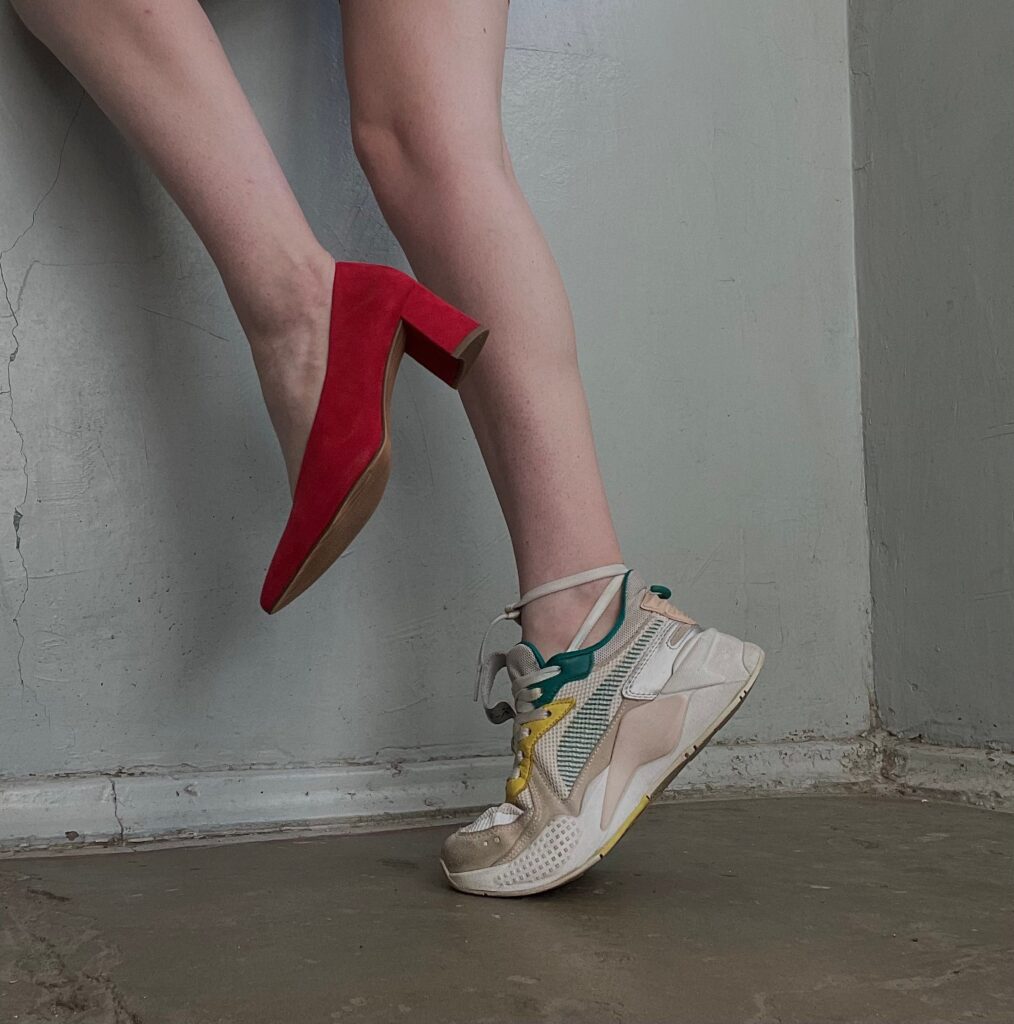
Walk up even a slight incline and your calves and Achilles work differently than they do on flat ground. Heel drop builds a version of that same tilt into a shoe before you’ve taken a step. How much tilt there is changes how your calf and Achilles handle each stride.
The basic definition
Heel drop (also called offset, or heel-to-toe drop) is the difference in height between a shoe’s heel and forefoot, measured in millimetres. 27mm heel, 17mm forefoot, 10mm drop. That’s it.
According to RunRepeat’s lab measurements across hundreds of shoes, drop typically runs from around 0mm up to 15-16mm, and shoes are generally grouped into four rough categories:
- Zero drop (0mm)
heel and forefoot sit at the same height
- Low drop (1-4mm)
a slight lift, common in shoes marketed as “natural” or transitional
- Mid drop (5-8mm)
the middle ground, increasingly common as brands have moved away from the old standard
- High drop (8mm+)
a more traditional, pronounced heel lift
Don’t confuse drop with stack height. Stack height is the total amount of cushioning material under your foot; drop is just the difference between the two ends. Two shoes can have identical drop but wildly different amounts of actual cushioning, or vice versa.
Why it matters
Drop changes how load moves through your leg with every stride. A higher drop lifts the heel, which shortens the distance your calf and Achilles tendon need to stretch on impact, effectively taking some strain away from them. A lower drop asks your calf and Achilles to do relatively more work, since there’s less built-in heel lift doing that job for you.
This isn’t just something a shop assistant says to sell you a shoe. A 2021 study in Frontiers in Bioengineering and Biotechnology had the same group of rearfoot-striking runners run in an 8mm-drop shoe and a −8mm-drop shoe, and found a real difference: the lower-drop shoe pushed their landing point further forward on the foot and made each footfall land noticeably harder. Separate biomechanics research backs up the general pattern: shoes with more drop tend to encourage a heel-first landing, while zero-drop and low-drop shoes shift runners toward landing more on the middle of the foot.
The practical trade-off, per running specialists, generally comes down to this: a higher drop shoe tends to relieve pressure from the calves and Achilles, which can help manage injuries like Achilles tendonitis, while a lower drop shoe tends to reduce strain on the knees and hips instead. Neither is objectively “better”. It depends which part of your body you’d like to keep functioning.
The performance angle
Lower drop isn’t only a question of injury risk. It also affects performance, in a way that directly trades off against the protection higher drop offers.
The Achilles tendon works like a spring: it stretches under load during each stride and snaps back during toe-off, and that elastic recoil contributes a real chunk of the energy behind each stride. A 2023 review in Biological Reviews put the mechanical energy savings from this Achilles storage-and-release effect at around 35%.
35%: the estimated share of each stride’s energy that comes from elastic recoil in the Achilles tendon.
A lower drop lets the tendon stretch through a greater range on every step, which means more elastic energy potentially available to return. A shorter Achilles moment arm (essentially a shorter lever between your calf muscle and heel bone) means more load goes into stretching the tendon rather than the muscle doing the work, and a 2021 Scientific Reports study confirmed this translates into greater elastic energy storage and return. Whether that also means better running economy is less settled: an earlier Journal of Experimental Biology study found runners with shorter moment arms had better economy, but a more recent Physiology International study found the reverse. Either way, some runners favour a lower drop for this reason alone: not to manage an injury, but for the potential performance benefit.
This works against you as much as it works for you. Above, we explained that a higher drop protects the Achilles by shortening how far it has to stretch each stride. Lower drop gives you more spring precisely because it removes that protection and lets the tendon stretch further. More stretch means more elastic energy return, but it also means more load on the tendon with every single stride. You can’t have the bounce without the loading that comes with it, which is exactly why the gradual-transition advice below
matters.
What used to be normal, and what’s changed?
For decades, 12mm was the standard drop across most running shoes. That’s shifted noticeably in the last decade, with far more shoes now sitting in the 6-10mm range as brands have responded to the barefoot/minimalist running movement of the early 2010s, without going all the way to zero drop.
If you’re thinking about changing your drop
Changing drop too quickly is one of the more reliable ways to aggravate your calves and Achilles. If you’re moving to a lower drop than you’re used to, even by as little as 4mm, do it
gradually and let your calves and Achilles adapt. Going from a 12mm shoe straight into a zero-drop shoe overnight is a fairly reliable way to aggravate the exact tendons that drop is supposed to help protect.
A sensible approach: change drop by no more than 2-4mm at a time, and give your body a few weeks in each step before moving further.
If drop matters this much, why not just run in high heels?
Fair question. A stiletto has an enormous heel drop, sometimes 60-80mm, so by the “higher drop protects the Achilles” logic above, it ought to be marvellous for your calves. It isn’t, and the reasons why are useful for understanding drop properly.
A running shoe’s drop comes from a gently sloped wedge of cushioning spread across a stable, wide base, engineered to still let your foot roll through its natural motion. A stiletto achieves its drop through a single narrow spike directly under the heel, an entirely different proposition. Long-term high heel wear shortens the calf muscle and reduces Achilles flexibility, and forces the ankle into a plantarflexed, slightly inward-rolled position that’s considerably more prone to rolling over. The damage doesn’t stay confined to the heels either: studies of habitual wearers found the altered gait and increased strain persisted even once the heels came off and flat shoes went back on.
So the takeaway is that heel drop is a spectrum with a sensible middle, not a dial to crank all the way up for maximum benefit. A running shoe’s 8-12mm is a carefully engineered
compromise. A stiletto’s 70mm is a foot injury with a heel attached.
Plantar fasciitis and drop
If you’ve got plantar fasciitis specifically, drop matters more than most runners realise, since a higher drop shifts load away from the fascia and up toward the calf, which is exactly why we recommend a minimum 8mm drop in our plantar fasciitis shoe guide. If your issue is more Achilles or calf-related instead, the same logic applies in reverse.