
From Bolton Spikes to a Fitness Icon: The Reebok Story
Author: Running Style | Published: 20 August 2026 | Updated: 20 August 2026
Reebok’s running range in the UK today is small: a handful of gym-crossover trainers with names like Harmony Road and Endless Road, nothing resembling a dedicated racing shoe. That is a marked change from where the brand started, and from where it stood only a few years ago. The story of how it got here runs through a Bolton bedroom, an aerobics craze, an inflatable basketball shoe, and two changes of corporate ownership.
A spiked shoe from a Bolton bedroom
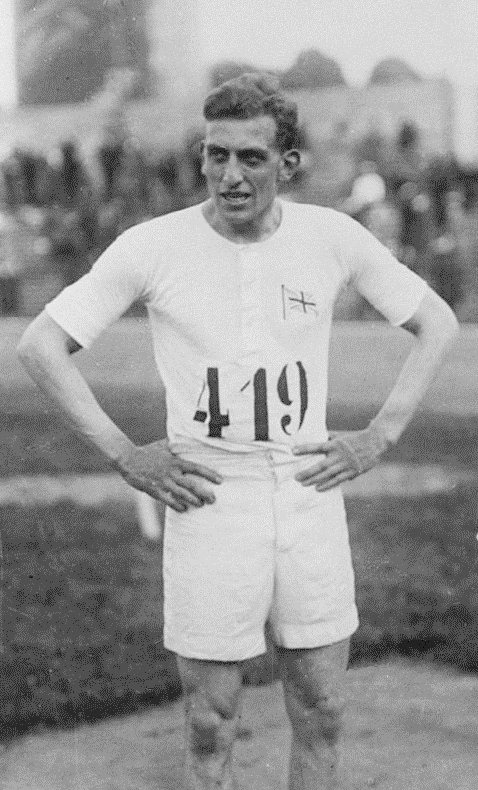
In 1895, 14-year-old Joseph William Foster began making spiked running shoes above his father’s sweet shop in Bolton, Lancashire, a founding story recounted consistently across Reebok retrospectives, including Wikipedia’s company history. He founded J.W. Foster in 1900, later renamed J.W. Foster and Sons once his own sons joined the business, and opened a small factory called Olympic Works. Foster’s handmade “running pumps” became known among elite athletes, and the company won a contract to supply the British Olympic team’s running shoes for the 1924 Paris Games. Harold Abrahams and Eric Liddell both won gold that year wearing Foster’s spikes, a story later retold in the 1981 film Chariots of Fire.
Foster becomes Reebok
By the late 1950s, two of Foster’s grandsons, Jeff and Joe Foster, wanted to take the family firm in a more commercial direction and felt their ideas were being sidelined within it. In November 1958, they founded a companion company of their own in Bolton, taking the name from a dictionary entry for the grey rhebok, a small African antelope, after Joe won the dictionary in a school sprint race. J.W. Foster and Sons continued trading alongside the new venture for close to two decades before being formally absorbed into Reebok in 1976.
Leaving running behind: aerobics and the Pump
Reebok’s biggest commercial successes had little to do with running. The Freestyle, launched in 1982 and designed by Angel Martinez specifically for women, rode the aerobics boom popularised by Jane Fonda’s workout videos; by 1984 it accounted for more than half of Reebok’s total sales, a figure reported by sneaker-history site Sneaker Freaker. Reebok followed it in 1989 with the Pump, the first shoe with an internal inflation mechanism, developed with designer Paul Litchfield and aimed squarely at basketball rather than running. The Pump made Reebok briefly one of the largest sportswear companies in the world; a 1990 New York Times report estimated that if the Pump were its own company, it would rank as the industry’s fourth largest.
76%: Reebok’s US sales growth in early 2021, the year it was sold and its running range began shrinking.
Two changes of ownership
Reebok remained independent, and briefly dominant, through the 1980s before Nike overtook it in 1989. Adidas bought Reebok in 2005 for $3.8 billion, aiming to combine the two brands’ US market share against Nike. The pairing struggled: Reebok’s share of Adidas’s overall revenue declined for years afterward, and its revenue fell 22% during the pandemic in 2020, according to a company history published by business site Front Office Sports; Adidas announced its intention to sell the brand that same year. The sale, agreed in August 2021 and completed in March 2022, went to Authentic Brands Group (ABG), a New York firm whose portfolio also includes Brooks Brothers (unconnected with Brooks Running), Eddie Bauer, and Forever 21. Notably, Reebok’s US sales were reportedly up 76% in the first half of 2021, ahead of the sale, according to NPD Group data cited by WWD, so the change of ownership was not forced by an immediate running-shoe sales collapse.
Why the running range has shrunk
ABG does not manufacture or design products itself in the way Adidas or an independent Reebok once did. Its stated operating model, used across its roughly 30-brand portfolio, centres on licensing: ABG controls the intellectual property and brand direction, while a network of regional partners and distributors handle manufacturing, retail, and design execution, according to ABG’s own statements at the time of the deal. For Reebok specifically, ABG set up a “Reebok Design Group” to keep design in-house while distribution runs through licensees such as Foot Locker in the US.
Under Adidas, Reebok had built a credible performance running line: the PEBA-based Floatride Run, Floatride Run Fast, and Floatride Run Fast Pro were lightweight racing and tempo shoes that reviewers at the time, including footwear-testing site Solereview, rated competitively against established running brands. Several of those models disappeared from the range shortly after the ABG sale completed; Solereview’s own running-shoe guide noted the Run Fast 3 and Run Fast Pro were no longer available as of its 2022 update. What has replaced them in the UK is a smaller set of everyday trainers built around older cushioning platforms such as Flexweave and MemoryTech, positioned for gym and general fitness use rather than dedicated performance running. Reebok has continued to develop newer cushioning, including Floatride Energy and the nitrogen-infused SuperFloat foam used in the FloatZig line, but these have had a more visible presence in the US market than in the UK.
The broader pattern fits ABG’s public strategy for Reebok, which has centred on rebuilding basketball and lifestyle categories, including a renewed push into basketball under former NBA player Shaquille O’Neal, rather than performance running. A 2026 report from trade publication Retail Dive noted job cuts within Reebok’s footwear business as its US operating partner shifted focus toward apparel, a further sign that running has not been the priority category during the ABG era.
A Bolton story, twice over
Reebok’s UK running range today, then, is a small remnant of a brand whose identity was built on aerobics, basketball, and inflatable sneakers more than on performance running, now owned by a company whose model favours licensing over in-house product development. Its roots, though, remain squarely in running: a Bolton teenager’s spiked shoe, sharpened for the 1924 Olympics, still sits underneath the Reebok name. Bolton’s running-shoe story did not end with Reebok, either. Another shoemaker trained at the same Foster family firm, and left it the same decade Reebok was formed, to build a company that has stayed almost entirely dedicated to running ever since.