
Articles

Should Teenagers Run Marathons?
England Athletics currently bars U18 athletes from marathon-distance competition. What the evidence says about whether older teenagers should attempt one anyway.
Read More
How Far Should Children and Teenagers Run?
What England Athletics recommends for children's and teenagers' running distances, and why chronological age alone is the wrong way to work it out.
Read More
The Best Running Bras in 2026
Four running bras assessed against the research on support, comfort and running performance, from a budget Decathlon option to specialist wired and wire-free designs.
Read More
How Should a Running Bra Fit?
A practical guide to checking band, cup and strap fit before you buy, plus the running test that reveals more than trying a bra on standing still.
Read More
Do Runners Need to Eat More Protein?
Runners do need more protein than the general population, technically speaking. But for most recreational training loads, the gap above an ordinary healthy diet turns out to be small, not a reason to overhaul what's on the plate.
Read More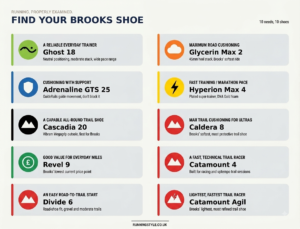
The Complete Guide to Brooks’ Current Range: Which Shoe Fits Your Running?
A guide to Brooks' current shoe range, covering neutral daily trainers, max-cushion, stability, speed/racing, budget, and trail options, built from Running Style's pricing and specification database.
Read More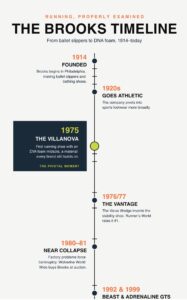
From Ballet Slippers to the Boston Marathon: The Brooks Running Story
A history of Brooks Running, from its 1914 founding as a ballet-slipper maker through the 1975 Villanova, the shoe that introduced EVA foam to running, and the 1976/77 Vantage, which established the modern stability shoe, up to the brand's 2001 refocus on running and its current DNA foam lineup.
Read More
Why Morning and Evening Runs Feel Different
Science Why Morning and Evening Runs Feel Different Author: Running Style | Published: 15 August 2026 | Updated: 15 August 2026 Morning versus evening running looks like a straightforward matter of preference. It isn’t. Body temperature, hormones, digestion and available fuel all shift through the day,...
Read More
What is Heel Drop in Running Shoes, and Why Does it Matter?
A shoe’s heel drop is just the height gap between heel and forefoot, but that one number quietly shapes injury risk, performance, and which part of your body ends up doing the extra work. We break down what it means and how to think about it.
Read More
Why Running Tracks are Spongy, Not Rock Hard
A springy track surface looks like an odd choice when concrete feels faster underfoot. But resilience and damping are two different properties, and the Harvard experiments that shaped modern track design found a tuned middle ground beats both extremes: 2-3% faster times and roughly half the injury rate of rigid...
Read More